

#01
Question 1
The burning of the crankshaft and connecting rod is caused by not checking the oil level of the lubricating oil before operating the high-pressure pump.
Before starting any equipment, it is essential to check the electrical, water level, and oil level to ensure accuracy, which is basic knowledge. However, some users ignore this common sense and operate the equipment without performing checks after installation. This results in the crankshaft and connecting rod being burned due to insufficient oil in the crankcase.
#02
Question 2
The high-pressure pump crankcase oil plug was not replaced, causing oil leakage.
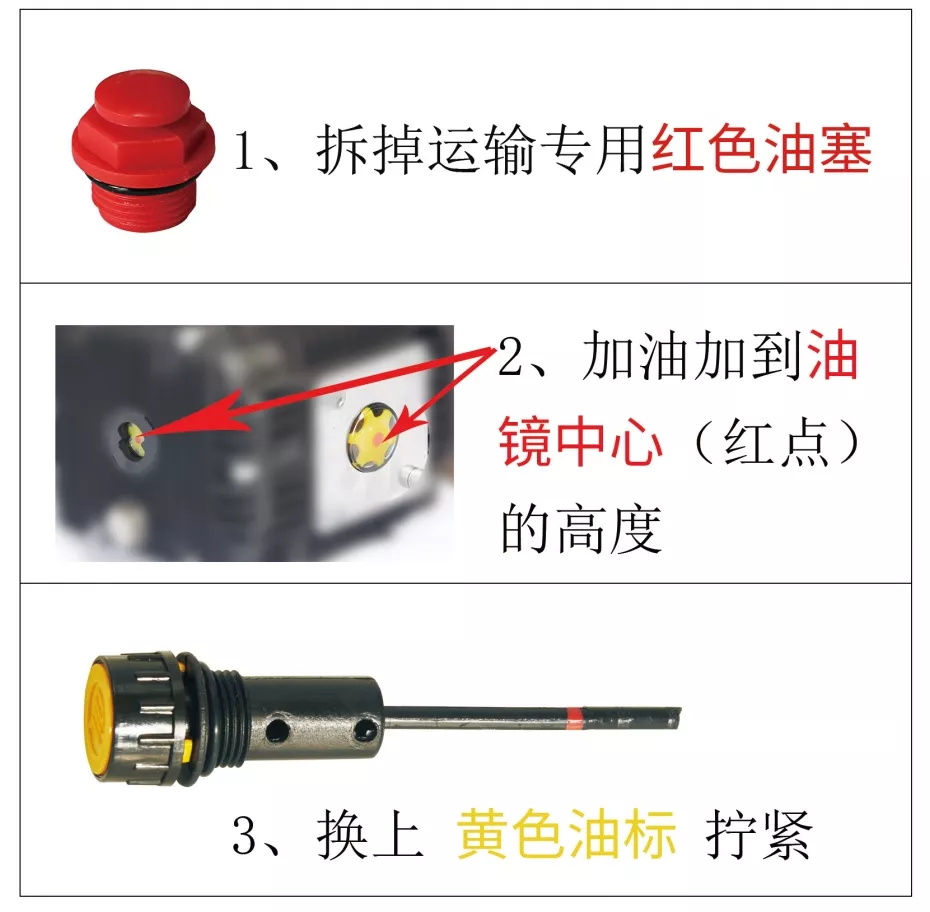
Some high-pressure plunger pumps are pre-filled with lubricating oil at the time of manufacture to prevent oil leakage during transportation. To ensure this, the oil inlet is usually sealed with an oil plug that does not allow air passage, and the oil level indicator with a vent hole is packaged separately. However, many new users are unaware or do not carefully read the instructions and operate the high-pressure pump without replacing the oil level indicator. As a result, the crankcase of the high-pressure pump is not ventilated, leading to oil seal leakage at the shaft head and plunger seal.
#03
Question 3
Incorrect amount of lubricating oil added to the high-pressure pump crankcase, or use of lubricant not meeting specifications, leading to burning of the crankshaft and connecting rod.
The high-pressure pump has different loads depending on parameters, and thus requires different lubricant specifications. Improper use affects the operation of the high-pressure pump and may even cause burning of the connecting rod and crankshaft. Oil quantity must not be excessive or insufficient. All equipment has specific maintenance procedures, and high-pressure pumps are no exception. Lubricants also have replacement cycles. Lack of understanding of these can lead to prolonged intervals between lubricant changes, resulting in burning of the crankshaft and connecting rod.
#04
Question 4
Insufficient transmission power is due to improper design of the belt and pulley, causing the high-pressure pump to fail to operate normally.
When using belt drive, if not designed with scientific calculations, the belt and pulley are arbitrarily configured. The resulting phenomenon is that after the high-pressure pump starts, the belt jumps and transmits power in a fluctuating manner, or it may seem the transmission is normal, but short-term operation causes the belt to heat up, and the heat is transferred to the high-pressure pump, leading to misdiagnosis of the high-pressure pump as faulty. Some customers believe the power configuration is sufficient. In reality, the transmission power does not meet the required driving power for the high-pressure pump. Minor losses result in abnormal operation. If not resolved in time, long-term operation may cause damage to the crankshaft bearing of the high-pressure pump or lead to belt overheating and fire.
#05
Question 5
When a high-pressure pump is equipped with a coupling or pulley, improper installation methods cause oil leakage from the high-pressure pump.
When a high-pressure pump is equipped with a coupling or pulley, the installation personnel lack necessary professional knowledge. They believe that the installation of holes and shafts should be convenient. They ignore or are unaware of the tolerances allowed by possible machining parts and burrs, making it impossible to install them. They do not check the tolerances of the shaft and hole or the burrs, but instead use a hammer to strike, which causes the crankshaft of the high-pressure pump to shift. The crankshaft oil seal moves, leading to oil leakage from the high-pressure pump. They believe the quality of the high-pressure pump is problematic.
#06
Question 6
The strength and stability of the frame are insufficient.
When installing a high-pressure pump, ensure the strength and stability of the frame during frame manufacturing. Prevent equipment damage caused by insufficient frame strength.
#07
Question 7
When high-pressure plunger pumps are used in northern areas during winter, if the ambient temperature drops below zero degrees Celsius and the discharge of water from the high-pressure pump is ignored, the water inside the pump may freeze, expand, and damage the pump. In severe cases, the high-pressure pump may be rendered inoperable.
#08
Question 8
Ensure that the high-pressure pump has a reliable water supply.
If the high-pressure pump lacks self-priming capability or has poor self-priming ability, ensure that the water supply pressure is between 2-5 Bar, and that the inflow rate is higher than the outflow rate of the high-pressure pump. The water supply piping should avoid bends with angles equal to or less than 90 degrees, and the pipe diameter should gradually decrease from larger to smaller.
#09
Question 9
During the initial operation of the high-pressure pump, air must be purged from the pipeline to prevent cavitation damage to the high-pressure pump.
#10
Question 10
When connecting the high-pressure pump to the unloader valve, incorrect connection of the inlet and outlet ports or blocking the overflow port will prevent the high-pressure pump from unloading pressure, leading to damage or failure of the high-pressure pump.
