

To prevent major accidents, adding a safety valve to equipment is a common safety measure, which plays a crucial role in enterprise safety. Installing a safety valve can effectively avoid safety risks caused by unloader valve wear, pipeline damage, and other issues, significantly enhancing equipment safety performance.
The safety valve belongs to the category of automatic valves, mainly used on boilers, pressure vessels (including high-pressure washers) and pipelines, to control pressure not exceeding the specified value, playing an important protective role for personal safety and equipment operation. The closure element of the safety valve remains closed under external force, and when the pressure of the medium inside the equipment or pipeline exceeds the specified value, it prevents the pressure of the medium inside the pipeline or equipment from exceeding the specified value by discharging the medium to the outside of the system.
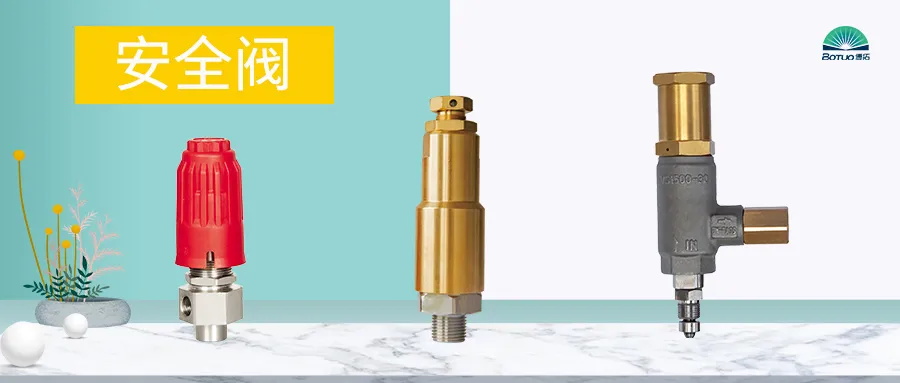
The nameplate of a safety valve generally marks the rated discharge capacity of the valve for certain conditions (pressure, temperature, medium). However, the actual operating conditions (pressure, temperature, medium) often differ from those on the nameplate. In such cases, the discharge capacity of the safety valve needs to be recalculated. In any case, the discharge capacity of the safety valve must be greater than or equal to the safety relief capacity of the pressure vessel.
Take an example of a low-end version 500Bar industrial high-pressure washer (without safety valve configuration) on the market:
1. Normal condition: New machine is used with 500Bar pressure, equipped with 040 nozzle, with no backflow from the unloader valve, and the usage is normal.
2. Risk condition: New machine is used with 450Bar pressure, equipped with 040 nozzle, with slight backflow from the unloader valve, which is in an open state. This condition is continuously used for six months, causing wear on the unloader valve and nozzle due to high-pressure water erosion. At this point, the pressure has dropped below 400Bar. The worker keeps adjusting the unloader valve to maintain the pressure at 450Bar. One day, when the worker turns the unloader valve to increase the pressure to 500Bar, the adjustment has already reached the limit of the unloader valve. When the spray gun is turned off, the pump head pressure instantly jumps to 700Bar, and the risk occurs.
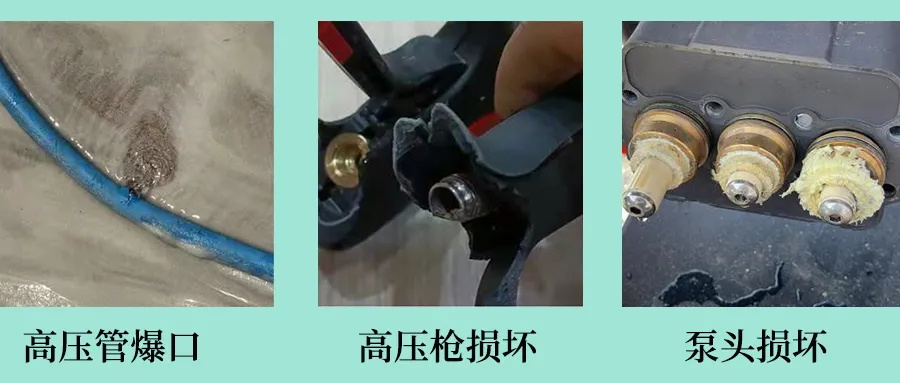
The following situations may occur in actual cases:
Pump head cracking and water leakage / crankcase explosion / high-pressure hose rupture / high-pressure gun disintegration and rebound / more severe cases can threaten the life safety of operators. These incidents cause significant direct economic losses to enterprises.
Since the safety valve is so important, how to select and configure a safety valve?
Safety valve standard: the maximum pressure of the safety valve = (1.1-1.2) * maximum pressure of the pump. Taking the above product as an example, the maximum pressure of the pump is 500Bar, the safety valve should be configured with a pressure not less than 550Bar. The safety valve can be set to 550Bar. When the instantaneous pressure of closing the gun does not exceed 550Bar, the safety valve will not activate; when the instantaneous pressure exceeds 550Bar, the safety valve will instantly activate to release pressure to a safe range.
Our company also has developed and manufactured safety valves compatible with high-pressure pumps (specific details can be viewed by clicking the menu: Product Center -> High-Pressure Accessories -> Safety Valve). Welcome to consult and purchase. If you still have questions about which type to choose after reading, you can also consult our sales representatives.
Finally, Botolini reminds you: safety comes first, prevention is better than cure, no damage means full protection! We recommend forwarding this to end customers and those in need, because everyone's well-being is truly good.
